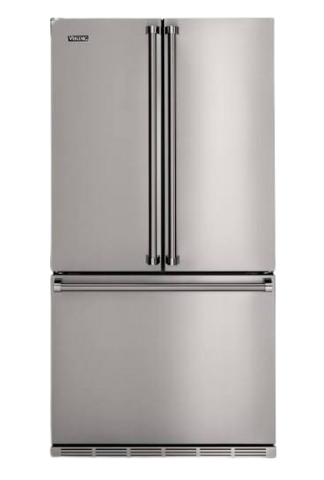
When a refrigerator is not cooling, first protect the food that needs refrigeration. Then check the visible controls, whether the doors close normally and whether packages obstruct the interior vents. These checks can reveal a setting or storage problem; they cannot confirm a compressor, fan or refrigerant fault. This guide separates the observations you can make from the work that requires a diagnosis.
Put food storage ahead of troubleshooting
The FDA recommends keeping refrigerated food at 40°F (4°C) or below and a freezer at 0°F (-18°C). An appliance thermometer can help establish the actual storage temperature. A selected number on the door display may be a target setting, so do not treat it as a measurement unless your product manual says it is one.
Keep door openings brief while arranging an alternative cold-storage option if needed. Follow FDA guidance for the particular food and its time-temperature history. An item feeling cool, smelling normal or looking unchanged is not sufficient evidence that it is safe. Do not taste food to investigate a cooling failure.
Do not confuse a manufacturer's stabilization period with permission to leave perishables in a warming cabinet. A refrigerator can need time to settle after installation or a control adjustment while its contents still need another suitable storage arrangement.
Is the refrigerator warm, the freezer warm, or both?
Identify the affected storage space before looking for an explanation. A refrigerator-freezer combination, two separate built-in columns and an under-counter beverage cabinet are different installations. Write down which compartment changed and which appears normal. Do not assume that two adjacent units share a cooling system.
The patterns below help describe the concern. They are not a parts-selection chart. For example, frozen food in one compartment does not establish the temperature of the other compartment or prove that a specific airflow component has failed.
| What you notice | What to record next |
|---|---|
| Fresh-food section seems warm; freezer appears cold | Any thermometer readings from each compartment, door closure and visible vent obstructions. |
| Both storage spaces seem warmer | When the change began, visible control settings and any known power interruption. |
| Display and interior lights work, but cooling is unclear | Whether the display shows a set point, an actual reading or a mode indicator. |
| One built-in column changes; the neighboring unit does not | The identifier of the affected column, rather than the brand of the whole appliance suite. |
Check doors, controls and visible airflow paths
Look for a container, drawer or shelf item preventing a door from reaching its usual closed position. Observe the accessible door seal for a folded section or visible damage. Reposition an ordinary food package if it is in the way; do not adjust hinges, detach seals or force a door into alignment.
Check the control instructions for your model. GE documents different behavior for dial controls, set-point displays and actual-temperature displays. Moving a dial toward a larger number does not mean the same thing as raising a digital temperature setting. Identify the control type before making a change.
Keep stored packages away from interior air openings identified in the owner guide. Do not insert tools into vents or remove an interior cover. On a built-in refrigerator, leave exterior grilles and cabinet trim in place while you photograph the installation.
- Note a door that no longer closes as it did previously.
- Check whether cooling was turned off or a display mode is indicated.
- Look for food packages covering an accessible air opening.
- Record a setting before changing it, rather than making several changes together.
Separate a selected temperature from a measured temperature
Record a thermometer value with the time and compartment where it was obtained. Keep that note separate from the control setting. A single reading immediately after a door has been open is different from a stable storage reading, so include the circumstances rather than presenting every number as equivalent.
Sub-Zero explains that temperature controls differ across product families. Use the guide for the installed model, especially when a display alternates between information screens. A photograph can preserve the units, symbols and wording without relying on memory.
Add power and installation history without guessing a cause
If the appliance became quiet, distinguish that observation from a confirmed loss of power. GE notes that its refrigerators can stop the compressor and fans during a defrost period. A quiet interval alone is therefore different from a persistent rise in storage temperature.
Report a known outage, recent installation or change after ordinary use. Do not keep cycling power to reproduce the symptom, and do not pull a built-in unit out to reach a concealed plug. If an accessible cord is damaged, there is a burning odor or the appliance repeatedly loses power, stop using it and obtain appropriate professional assistance.
For a refrigerator in a garage or another unconditioned area, mention the location and consult the model's permitted operating conditions. Las Vegas outdoor heat is a reason to check the installation requirements; it does not by itself diagnose an indoor refrigerator.
When to request refrigerator repair
Arrange a diagnosis when a cooling concern continues after the relevant owner-level checks, or when the door, controls or recurring alarms cannot be explained by the manual. Leave refrigerant connections, fans, electrical enclosures and concealed components to the person assessing the appliance. A symptom list cannot establish which part needs replacement.
For a Las Vegas inquiry, send the brand, accessible model number, affected compartment, observed temperatures and the approximate start of the problem. Add a room photo if the refrigerator is built in. Availability, access and the scope of work need to be discussed for the actual unit.
Questions about a refrigerator that is not cooling
Does a working interior light mean the refrigerator is cooling?
No. It establishes that the light operates, not that the storage spaces are at the required temperatures. Check the actual compartment conditions and the model's control instructions.
Should every refrigerator have its coils cleaned?
No universal cleaning instruction fits every installation. GE notes that many newer models do not require owner cleaning of the condenser coils. Follow the specific owner manual instead of removing a cover or pulling the refrigerator forward.
Can I identify a failed compressor from a warm compartment?
No. Door closure, controls, installation conditions and internal faults can produce overlapping symptoms. Record the pattern and request an assessment rather than ordering a compressor from an online checklist.
Sources & further reading
- FDA: safe storage temperatures and food-handling guidance
- GE Appliances: refrigerator not cooling enough
- GE Appliances: refrigerator does not run or cool
- Sub-Zero: refrigerator and freezer temperature settings
- GE Appliances: refrigerator airflow and owner FAQs
This guide draws on manufacturer owner-support resources. Instructions for your specific model take precedence. Internal repairs and component diagnosis require appropriate professional assessment.
Your next step
Find the right service for your equipment.
To discuss an appliance, email [email protected] with your equipment details and observations.